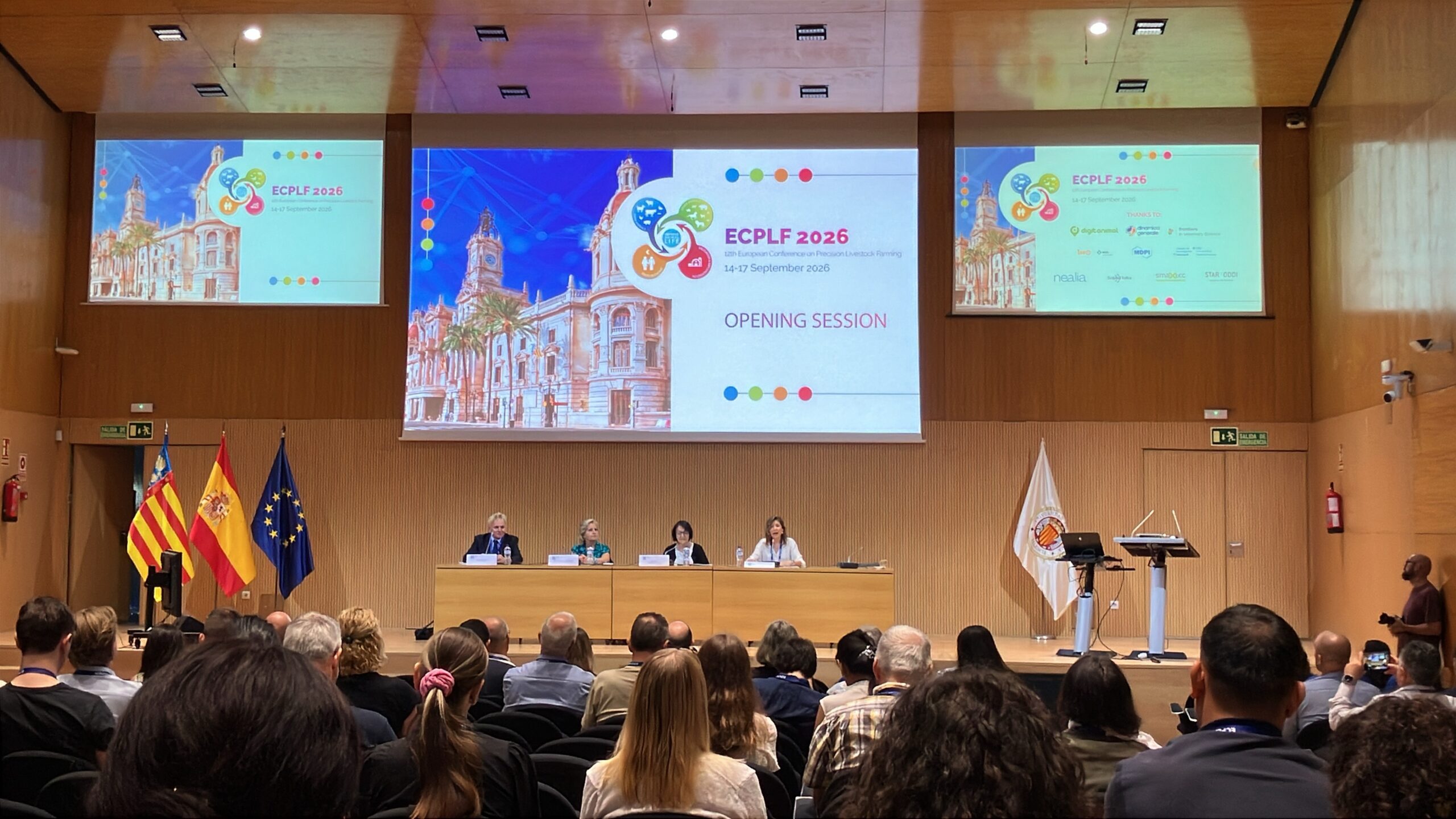
The 12th European Conference on Precision Livestock Farming (ECPLF) was held in Valencia, Spain, from September 14 to 17, 2026.
The ECPLF is a biennial conference that brings together industry experts, researchers, and professionals from around the world to present the latest advances in research, technology, and innovation in the field of Precision Livestock Farming (PLF).
This edition is dedicated to sharing scientific developments regarding animal monitoring systems based on sensors and other technologies, under the theme “Improving Animal Lives.” Precision Livestock Farming (PLF) employs sensors, sensing techniques, and other digital technologies to gather real-time information on individual animals or groups and their environment, enabling the use of decision-support tools for farmers, veterinarians, and other stakeholders in the livestock sector.
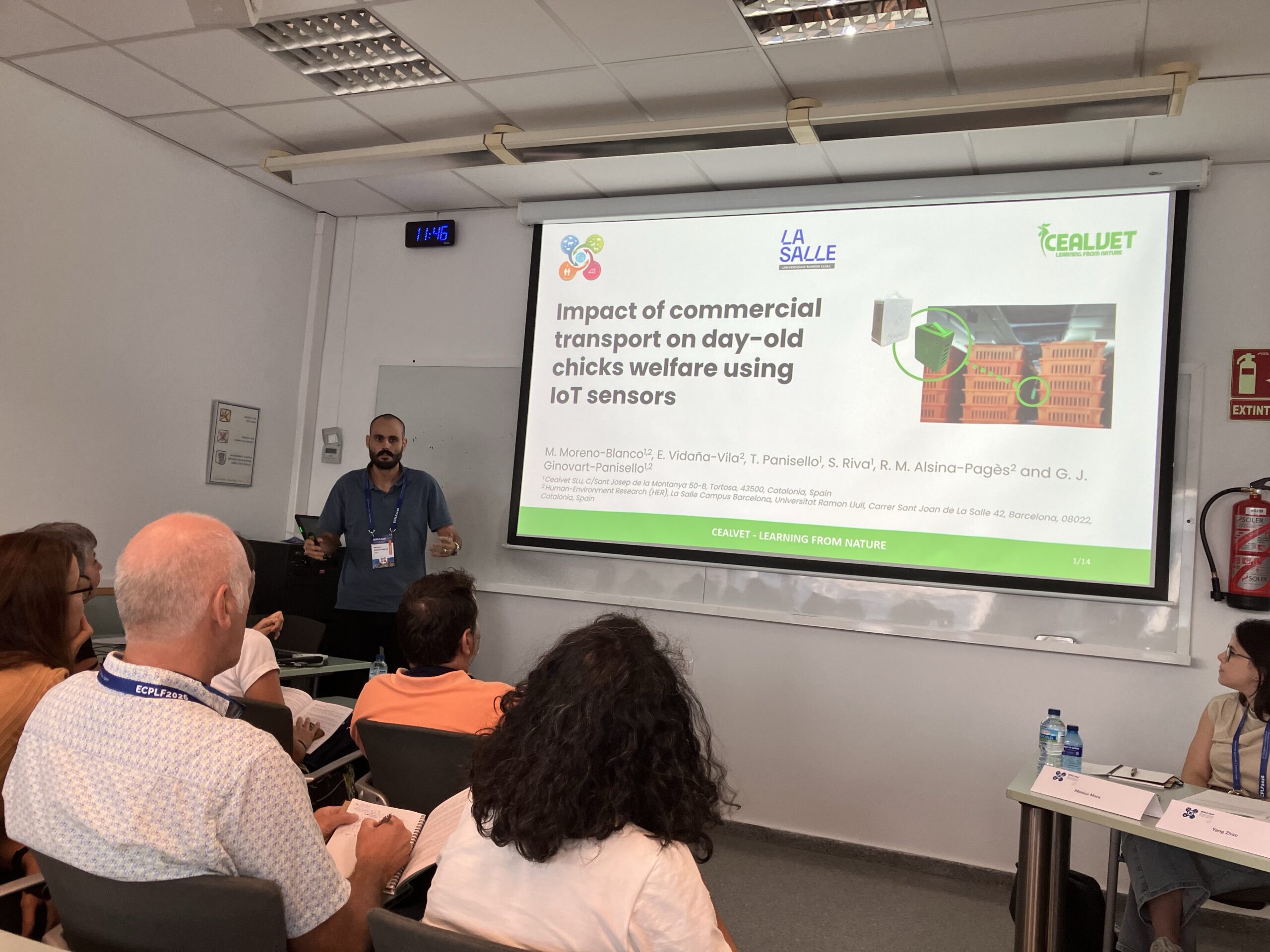
CEALVET, in collaboration with Ramon Llull University, participated in the ECPLF conference, presenting its study titled “Impact of commercial transport on day-old chicks welfare using IoT sensors”.
This study analyzes the combined use of IoT and bioacoustic technologies to monitor day-old chicks during transport from the hatchery to the rearing facility. A device developed for the study collects environmental parameters—such as temperature, humidity, and CO₂ levels—alongside the animals’ vocalizations, enabling a correlation to be established between environmental conditions and vocal behaviors.
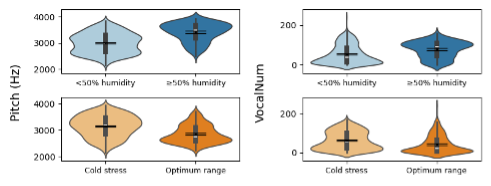
The study, based on 20 commercial shipments carried out in Spain in 2025, highlighted associations between journey duration, environmental conditions, and chick vocal activity. Specifically, an increase in vocalizations was observed during longer journeys, while temperature and humidity conditions deviating from optimal levels were associated with an increase in the frequency and pitch of the calls.
The research also highlighted that environmental conditions are not necessarily uniform within the same truck. A comparison of devices placed at the front and rear of the vehicles revealed significant differences in temperature and humidity, underscoring the importance of monitoring microenvironments during transport.
For CEALVET, participation in the congress represents a significant opportunity to share advancements made in applying bioacoustics, IoT, and artificial intelligence to animal welfare monitoring, thereby contributing to the European dialogue on the future of Precision Livestock Farming.
The results obtained also provide a foundation for developing increasingly advanced monitoring systems capable of integrating acoustic and environmental data and transforming them into useful, interpretable information for the poultry sector.