


VocalData® for Hatcheries
Chicks hatched in commercial incubators under intensive systems face various stressors from their first hours of life, stemming from environmental conditions and management practices. These factors can negatively impact their development and productivity.
VocalData® monitors chick health from their first vocalization by measuring: bird vocalizations, temperature, humidity, carbon dioxide levels, light intensity and color, and rectal temperature (AI prediction).
VocalData® offers numerous improvements in data management and quality. First, it provides more accurate data, as it only records when animals are present. Furthermore, it automates measurement, including advanced features such as rectal temperature prediction.
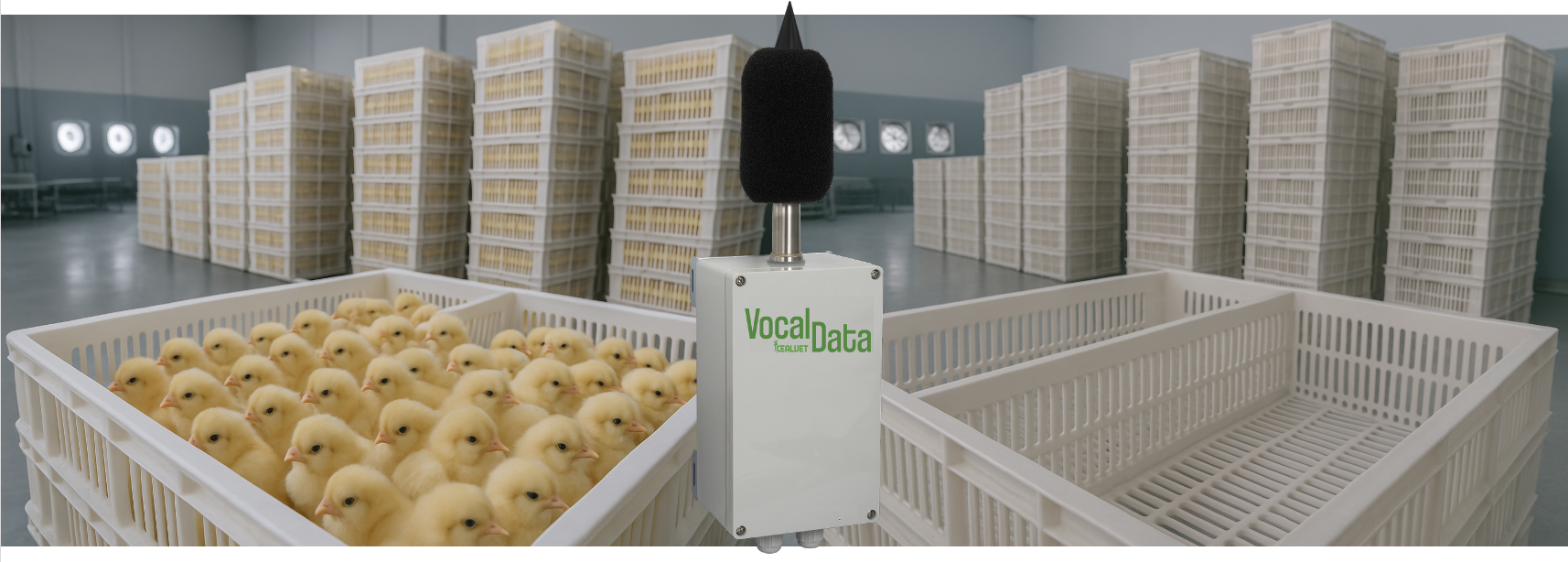
Another key advantage is its ability to integrate the generated data into high-quality information within pivot tables, facilitating analysis. It also helps reduce response times thanks to real-time alerts sent via phone or email.
In addition, VocalData® allows measurements to be taken at the chick box level thanks to its portable battery-powered devices and measurements in incubators to detect the hatching window.
Real-time detection allows for corrective measures to be applied and pattern detection to be observed during handling.
STUDY WITH VOCALDATA
Among its studies in the field of bioacoustics applied to animal welfare, CEALVET has analyzed how the vocalizations of newborn chicks change during the first 48 hours of life, a particularly delicate phase from a physiological and behavioral point of view. Specifically, the objective was to determine whether the early administration of a nutritional supplement can reduce the chicks’ initial stress and whether this effect can be detected through their vocalizations.
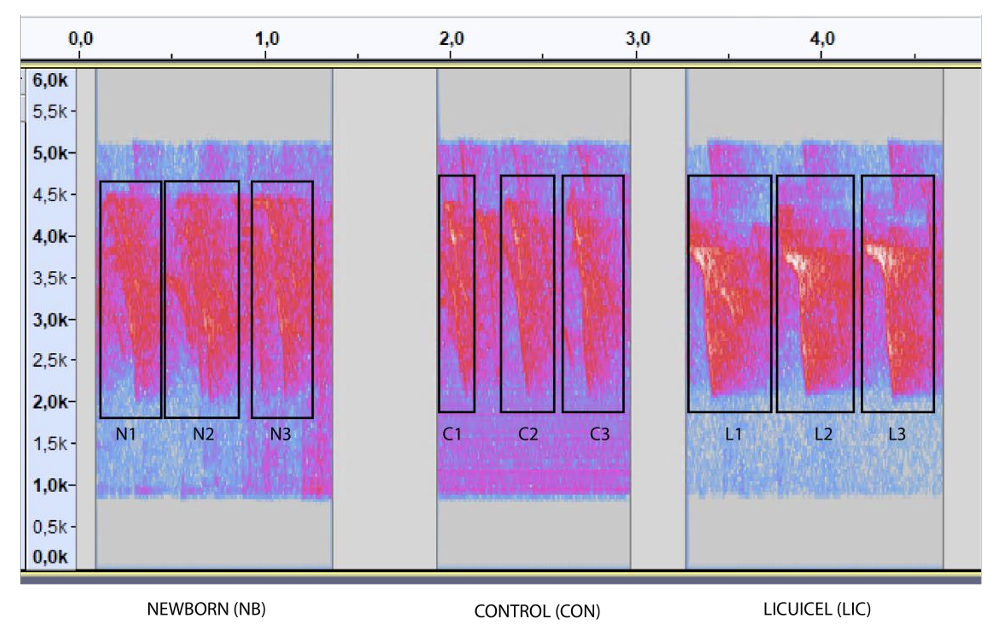
For this purpose, broiler chicks were divided into two groups: one fasted after hatching (control group) and the other immediately fed a nutrient gel. Vocalizations were recorded non-invasively and analyzed temporally and spectrally, considering parameters such as fundamental frequency (pitch), call duration, and the number of vocalizations over time. At 48 hours of age, hematological parameters were also analyzed to assess hydration status and stress response.
The results showed that chicks that had received the nutrient gel tended to produce vocalizations with lower average frequencies, less spectral variability, and, in general, a lower number of calls than fasted chicks. These acoustic features were interpreted as indicative of lower stress levels, since higher-pitched and more repetitive vocalizations are usually associated with situations of discomfort or distress. The acoustic data were supported by blood tests, which indicated less dehydration and a more stable physiological response in the fed chicks.
Bioacoustics thus becomes a useful and effective tool when the goal of the poultry farmer is to monitor in real time and ensure the health of the chicks, without compromising productive performance.

For more information, you can read our articles: